


Smuggling Route “From Bad to Worse”
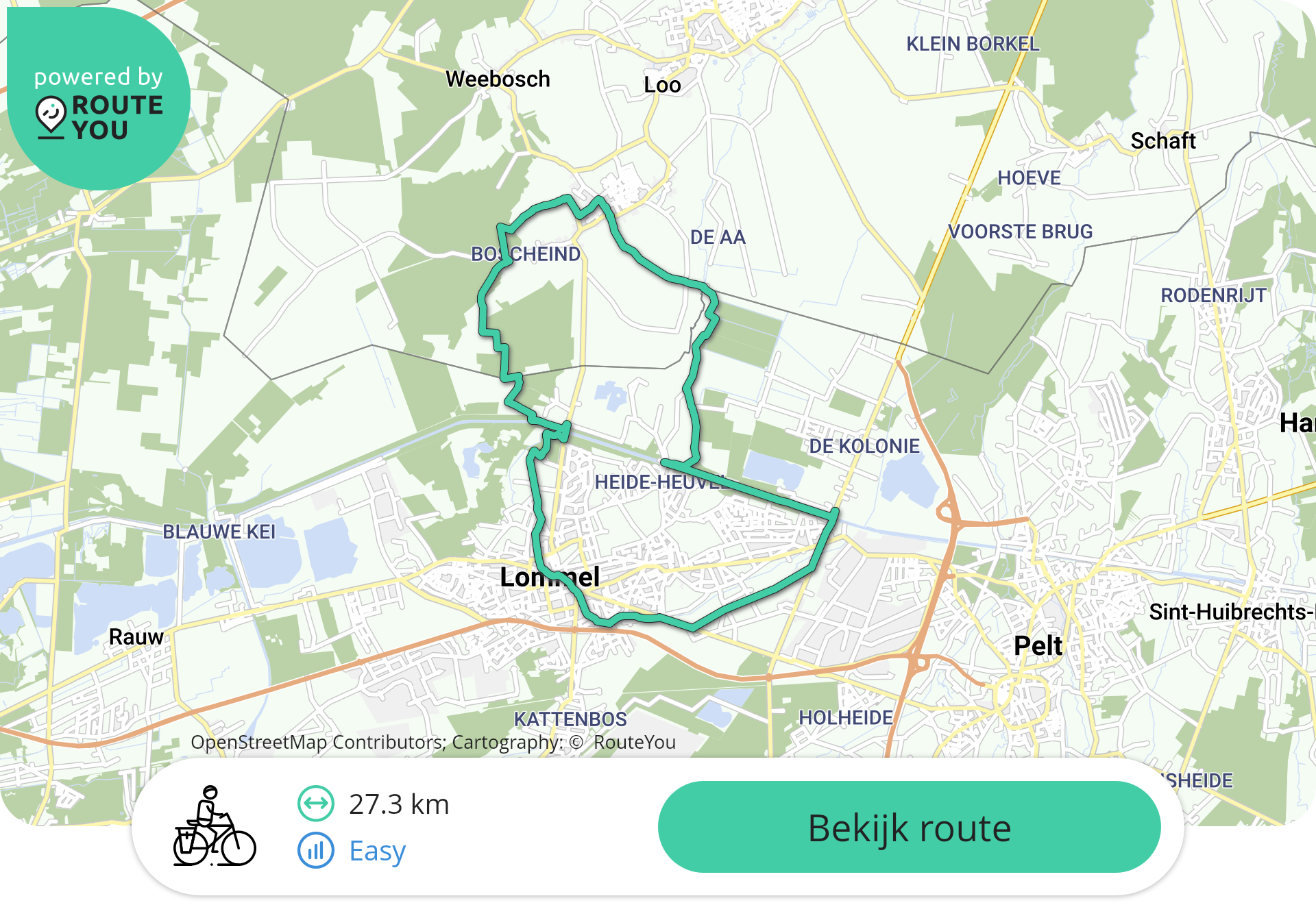
On this 27.3-kilometer cycling route, you will uncover Nellie’s smuggling past.
As a little girl, I often went with my uncle and my brother Toon to Belgium to play. I always wore the same dress with special pockets. In these, I could carry four packs of butter to sell in Belgium. Smuggling was really something I grew up with!
The bike route starts in Luyksgestel and takes you to the highest natural point in North Brabant. Next, you cross the border and follow the Bocholt-Herentals Canal towards Lommel. Along the way, you pass the smuggler café De Kroon and cycle over the infamous smuggling path. Then try to cross the border unnoticed via the customs house. Watch out in the center of Luyksgestel: make sure the “crow’s feet” don’t puncture your tires!
- Route type: cycling route
- Length: 27.3 km
- Elevation gain: 64 m
- Difficulty: easy
- Start & finish: De Drie Linden – Rijt 2, 5575 CD Luyksgestel
- You can join the route at any point. Want to start from Lommel? You can, for example, from House of Nature parking, Soeverein parking, or De Lossing parking near the Bocholt-Herentals Canal.
- Downloads: PDF file475.8 Kb(pdf) – GPX file31 Kb(gpx)
Highlights of the Route
- Bocholt-Herentals Canal: a notorious obstacle for smugglers, heavily guarded by customs.
- Smuggler Café De Kroon: a popular meeting place for smugglers and a perfect cycling rest stop.
- The smuggling path and customs house: try to cross the border unnoticed and see how smugglers outsmarted customs.
- Watch out for crow’s feet! Smugglers used these sharp obstacles to shake off pursuers.
Did you know …
- Before World War I, salt was mainly smuggled; later cigarettes, perfume, and gin became popular.
- Smugglers carried a pungel, a large shoulder bag to hide contraband.
- Smuggling was not seen as wrong. Whole villages participated, and it was openly discussed in cafés.
- They used clever tricks to cross the canal, like tar-coated jute sacks in which calves floated.
- The miller played a crucial role; by positioning the mill’s sails in a certain way, smugglers knew the customs officers were on patrol.
- Chases were spectacular! Smugglers scattered crow’s feet on the road to shake off customs vehicles.
- The smuggling adventure ended around 1960, when the EEC (EU predecessor) introduced a free market.
 Bjorn Snelders
Nellie’s Story
Read the full route story of Nellie on the Visit Brabant website, a fictional story based on real events.
In collaboration with Visit Brabant
This smuggling route is part of the Stories at the Border routes by Visit Brabant. Photos © Bjorn Snelders and Visit Brabant.


